

Hidden Gems – Imām Abū Mansūr Al-Māturīdī
رضي الله عن
by Shaykh Faheem
Name: Muḥammad ibn Muḥammad ibn Maḥmūd Abū Mansūr Al-Māturīdī[1] al-Hanafī
(أبو منصور محمد بن محمد بن محمود الماتریدي السمرقندي الحنفي) known famously as Abū Manṣūr al-Māturīdī or Imām al-Māturīdī. t
Titles: Known by numerous titles such as ‘Imām Ahlus Sunnah’ (alongside Imām Abul Hasan Al-Ash’arī t for his foundational works in Islāmic doctrines known as Aqīdah -Creed). Also known as Imām Al-Mutakallimīn (Leader of the Theologians), Musaḥḥiḥ Ahlus Sunnah (Rectifier of the Ahlus Sunnah)[2]
Demise– 333 A.H (944 AC) approximately ninety years old upon demise.
Region- Māturīd, which is a district in Samarqand[3] (a city in south-eastern Uzbekistan and among the oldest continuously inhabited cities in Central Asia).
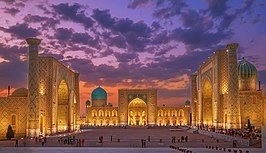 Synopsis Introduction – Imām Abū Abū Mansūr al-Māturīdī t is undoubtedly a gem amongst the precious personalities of the past, yet, for some strange reason, this forerunner of the creed of the Ahlus Sunnah wal Jamā’ah[4] is relatively unknown by most, even though the majority of Muslims today who are adherents to the doctrines formulated by him.
Imām Abū Mansūr Al-Māturīdī t is hailed as one of the pioneers of an orthodox Kalām tradition that remains in practice today and is named after him. It remains -alongside the Ash’arī Kalām tradition- as one of the two major Sunnī orthodox schools in practice today. In general, those who align to the Hanafī school of jurisprudence identify with the Māturīdī school of creed, though this is not a credal statute. Since the Hanafī school makes up for the majority of the Sunnī schools of Islāmic jurisprudence, the Māturīdī school by extension is recognized throughout the world as an orthodox representation of Sunnī Islām. The Māturīdī school was aided by the conquests and rule of the Great Seljuq Empire and Ottoman Empires respectively, who were predominantly of the Hanafi-Maturidi school. As such, the school reached as far as Afghanistan Pakistan, Central Asia, South Asia, Russia Balkan, China, Caucasus and Turkey as well as numerous other regions as well.
Teachers[5]
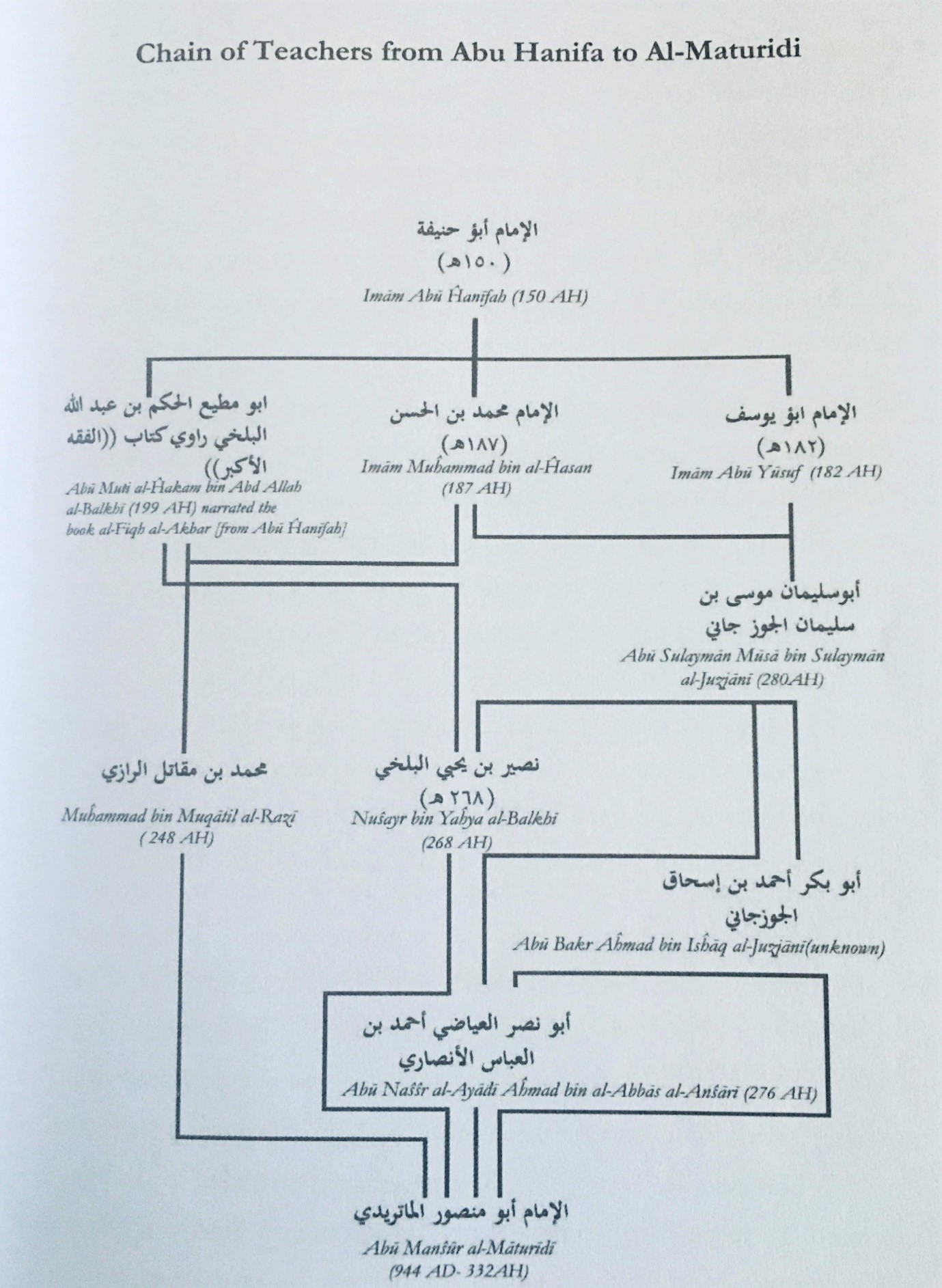 Teachers – Sanad (chain) of teachers reaching Imām Abū Hanīfah t
Brief Biography– Regarded as one of the promulgaters of the Transoxanian school of theology (Mā-Warā-un-Nahr -ما وراء النهر) many believe that Imām al-Māturdī t was a descendant of the erudite companion of the Prophet Muhammad ﷺ, Sayyidunā Abū Ayyūb al-Ansārī t as there is evidence of Ansārīs having migrated to the area of Samarqand. (This may be corroborated upon the realization that his teacher was known as an Ansārī as well). Whilst many scholars added the appellation of ‘Ansārī’ to his name, there is insufficient data to say for certain.
Imām al-Māturīdī t was famed for his refutations against the many prevalent heterodoxies at the time. He effortlessly fulminated their claims by synthesizing the Qur’ān and Sunnah with a sound reasoning that proved far too herculean for his rational opponents at the time.
The great Imām’s sharp intellect and sound reasoning was swiftly recognized as his opponents were left in a quagmire of their own making after engaging with him on matters of creed. He dedicated his life to the defence of the orthodox Islāmic creed by refuting the Sophists, Anthropomorphists, Dualists, Naturalists, Materialists as well as those who claimed the title of ‘Muslim’ on one hand, but who adopted Greek philosophy and many other devious beliefs on the other hand.
During his lifetime the mischief of the Mu’tazilite school became prevalent and the arguments propounded by Imām al-Māturīdī t against them proved to be a death knell against their deviant doctrines. His command of the language coupled with verbose explanations were presented with such clarity that submission to his arguments became the logical choice.
He is believed to be amongst the first to structure his works by delineating an epistemological approach to knowledge prior to approaching religious doctrine. This was a sensible methodology considering that the Mu’tazilite school predicated its doctrine primarily on rationale. In this manner, the esteemed Imām was able to correct the false notions first allowing the hard rationalists to see reason without the need to abandon the textual evidences. In this manner, he annihilated their erroneous approaches by refuting them with the very weapon they invested all of their faith in, i.e. the rationale.
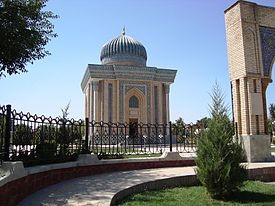
The great Imām passed away in Samarqand and a tomb survives to this day in honor of his great contributions to Islām. (see image below).
Works – Imām al-Māturīdī t penned several works covering Tafsīr (exegesis), Tajwīd (elocution), Usūl (principles) and other works numbering between 16-24.[6] However the only surviving books are;
- Kitābut Tauhīd (The Book of Monotheism) – A detailed theological account on Sunnī Creed covering epistemology, ontology, cosmology, natural philosophy, God’s Divine Attributes, and numerous credal matters.
- Ta’wīlātu Ahlis Sunnah (تأويلات اهلِ السنة) – is a voluminous Qur’ānic interpretation located in various libraries around the world and is consulted as a reference work by academics particularly on matters related to creed.
- Risālah Fī-mā lā Yajūz Alayh fil Qur’ān – is a treatise work on Qur’ānic recitation located in Istanbul.
Burial Site – The tomb of Imām al-Māturīdī is located in Samarqand. He was buried there in 944, in the cemetery Chokardiza where many other famous scientists of the Islamic world are believed to be buried as well. A military fortress was once here, therefore the cemetery is named: ‘Chokar’ (army) ‘Disa’ (fortress).
 [1] The Book of Monotheism, God and the Universe – A Manual on Sunni Theology page xxv with reference to Tabqāt al-Hanafiyyah, Volume One, Page 130.
[2] Manhajiyyatul Imām Al-Māturīdiyyah, Page 7.
[3] IBID Volume One, Page 244.
[4] The Ahlus Sunnah wal Jamā’ah broadly refers to the Ash’aris, the Mātūrīdīs and some include the orthodox Atharīs as the orthodox representation of Islām prior to the emergence of heterodoxies.
[5] The Book of Monotheism, God and the Universe – A Manual on Sunni Theology page xxvii.
[6] The Book of Monotheism, God and the Universe – A Manual on Sunni Theology page xxv
